
Rhino Horn Nasal Irrigation Pot
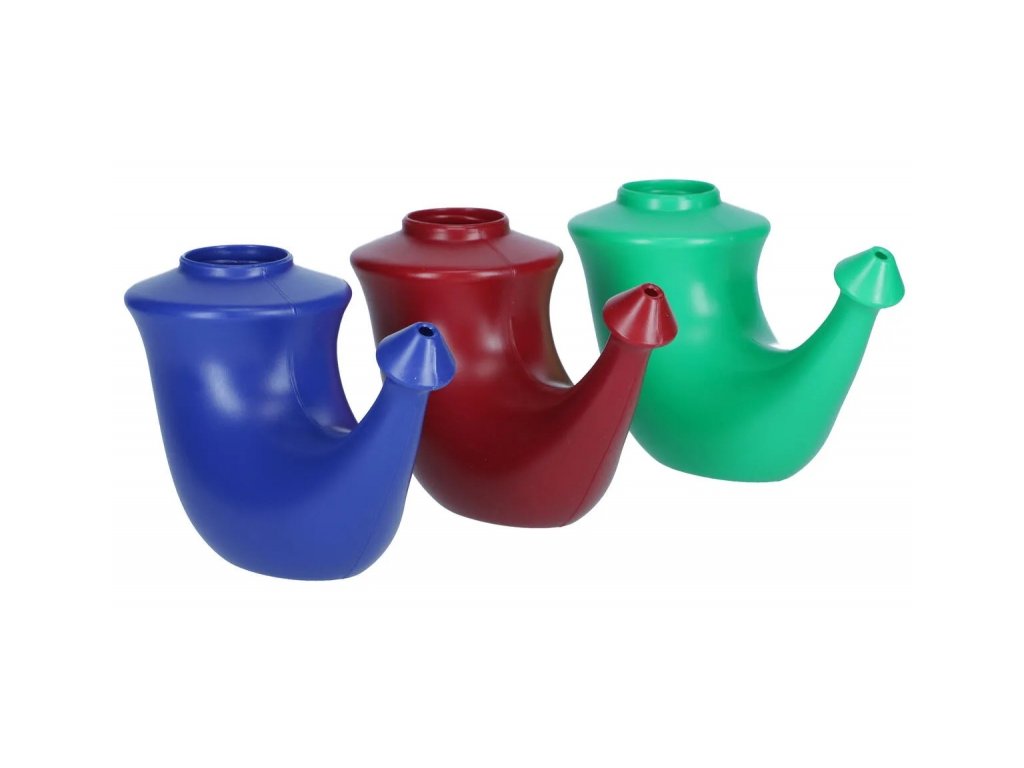




Rinse the nose with salt water has a preventive effect, hardening the nasal mucosa and making it more resistant to viral or bacterial infections. It also helps with problems with a blocked nose due to a runny nose, cold, hay fever or chronic rhinitis. In people suffering from chronic allergic rhinitis (especially due to allergies to pollen and dust), nasal irrigation removes allergens, thereby alleviating the problems.
It also has a therapeutic effect in acute or chronic inflammation of the nasal sinuses and paranasal sinuses, when the saline solution washes away inflammatory secretions, moistens the mucosa and accelerates its regeneration. Nasal irrigation has proven effective in surgical interventions in the nasal area, in people working in dusty environments and in cases of excessive drying of the nasal mucosa.
Usage:
Perform nasal irrigation once a day according to the following procedure. In the case of a more severe cold, inflammation of the nasal sinuses or an increased incidence of allergenic pollen in the air, nasal cleaning can be performed 2-4 times a day.
1. Pour one measuring cup (= 2.7 g) of table salt (NaCl) into the jug. Do not use salt substitutes or flavored salt, etc. Fill the jug completely with lukewarm water (approx. 37 °C). You can shake the jug or stir the water, e.g. with a measuring cup, to dissolve the salt more quickly.
2. Press the mouth of the jug against the side of your nostril – not from the front – and press gently so that the nasal opening is closed with the tip of the funnel. The solution should not leak out of this nostril.
3. Breathe through your mouth. Your mouth must be open. You cannot breathe through your nose while rinsing.
4. Lean forward slightly so that your head is above the sink, your chin should be pointing towards your chest if possible – it should not be stuck forward. Turn your head to the side while doing so, so that you are looking sideways.
5. Tilt the jug upwards and the water will soon start to flow spontaneously through the inside of your nose and out the other hole. When about half of the contents of the jug have flowed out, lift your head and remove the container. Most of the water will drain out of your nose on its own, the rest can be expelled by gently exhaling through your nose or blowing your nose gently.
6. Use the remaining half of the solution to rinse through the other nostril.
7. After rinsing, there should be no water left in your nose and nasal passages. This can be a problem, especially in winter. A simple blow is usually enough to completely remove the fluid from your nose.
All the water must come out
However, if there is still some fluid inside, proceed as follows:
Lean forward so that your head is pointing downwards. Turn your head to the side and blow your nose through the upper nostril. Turn your head so that your face is facing the floor and blow your nose through the same nostril again. Repeat the procedure several times if necessary. Repeat with the other nostril. Then straighten up and breathe in and out through your nose several times.
TIP: For easy application of salt into a jug without a measuring cup, you can use salt sachets in precise doses Rhino Salt
Additional parameters
| Category: | Dietary supplements |
|---|---|
| EAN: | 7090001498381 |
Be the first who will post an article to this item!
Be the first who will post an article to this item!


