
Manuka Doctor Soothing Balm for Light Lubricating 75 ml
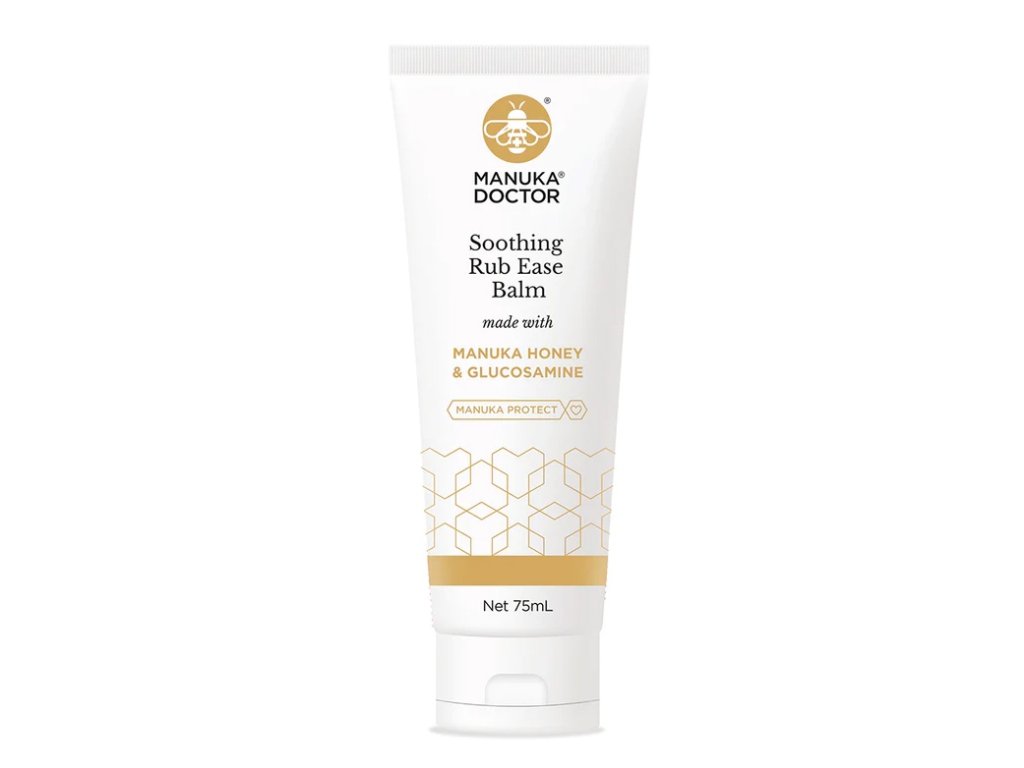





A cooling balm to relieve tired, aching muscles and joints.
- Contains glucosamine and Cannabis sativa seed oil to help reduce inflammation
- Peppermint oil to cool sore muscles
- Manuka honey to speed up the healing process
Volume: 75ml
How it works:
Hemp oil contains gamma-linolenic acid (GLA), which acts as a powerful anti-inflammatory. A 2011 study suggests that adding omega-3 fatty acids, which are found in hemp oil, may reduce inflammation. [1]
Glucosamine is often used as a supplement to treat symptoms of various inflammatory conditions and has been shown to inhibit the activation of inflammatory pathways in human synovial cells. These cells are responsible for producing components of synovial fluid, or joint fluid. [2]
Peppermint oil, when applied to the skin, creates a cooling sensation that helps reduce the heat caused by inflamed muscles.
High-strength manuka honey—made by bees that collect nectar from New Zealand manuka bushes—contains the active ingredient methylglyoxal (MGO), which has antimicrobial[3] as well as antibacterial effects on the body, according to a 2018 study from Ulster University. [4]
In a 2009 study in Germany and New Zealand, researchers suggested that honey may speed up the healing process because: [5]
- honey stimulates the body's inflammatory response, which leads to the regeneration of skin cells and connective tissues
The pharmaceutical use of beeswax dates back to ancient Egypt: according to the Ebers Papyrus (1550 BC), beeswax was a major ingredient in many recipes for ointments and creams used to reduce inflammation, treat burns and wounds, and relieve joint pain. [6]
References:
1. Janice K. Kiecolt-Glaser et al. Omega-3 Supplementation Lowers Inflammation and Anxiety in Medical Students: A Randomized Controlled Trial. Brain Behav Immun. 2011 Nov; 25(8): 1725-1734.
2. Yoshie Yamagishi et al. Evaluation of the anti-inflammatory actions of various functional food materials including glucosamine on synovial cells. Mol Med Rep. 2017 Aug;16(2):1353-1359.
3. Alvarez-Suarez JM, et al. The Composition and Biological Activity of Honey: A Focus on Manuka Honey. Foods. 2014 Sep;3(3):420-432. https://www.ncbi.nlm.nih.gov/pmc/articles/PMC5302252/
4. Johnston M, et al. Antibacterial activity of Manuka honey and its components: An overview. AIMS Microbiology. 2018. 4(4):665-664. https://www.aimspress.com/fileOther/PDF/microbiology/microbiol-04-04-655.pd
5. Simon A, et al. Medical Honey for Wound Care – Still the ‘Latest Resort’? Evid Based Complement Alternat Med. 2009 Jun; 6(2): 165–173. https://www.ncbi.nlm.nih.gov/pmc/articles/PMC2686636/
6. Filippo Fratini et al. Beeswax: A minireview of its antimicrobial activity and its application in medicine. Asian Pacific Journal of Tropical Medicine. Vol 9 Issue 9 September 2016, Pages 839-843.
How to use:
Apply to affected areas of the body as needed. For best results, apply up to three times daily. Wash hands before and after application.
Avoid direct contact with eyes. We recommend a patch test before use. Do not use if you are allergic to any of the listed ingredients.
Storage Store in a cool, dry place away from direct sunlight. Keep out of reach of small children.
INCI:
Aqua (Water), Butyrospermum Parkii (Shea Butter), Caprylic/Capric Triglyceride, Cannabis Sativa Seed Oil, Glycerin, Glyceryl Stearate SE, Mel (Honey), Cetearyl Alcohol, Cera Alba (Beeswax), Lanolin, Shea Butter Ethyl Esters, Glucosamine HCL, Phenoxyethanol, Benzyl Alcohol, Propylene Glycol, Menthol, Mentha Arvensis (Peppermint) Leaf Oil, Xanthan Gum, Menthyl Lactate, Ethylhexylglycerin, Dehydroacetic Acid, Limonene, Propolis Extract, Bee Venom, Sodium Benzoate.
Additional parameters
| Category: | Cosmetics |
|---|---|
| EAN: | 9421027849389 |
Be the first who will post an article to this item!
Be the first who will post an article to this item!